How Kevin Millard Uses YouTube to Generate More Real Estate Leads
A good-looking real estate website is not enough. We learned that one the hard way.
We can spend hours making a site beautiful, adding neighborhood pages, polishing photos, and building out every possible service page. But if nobody can find it, and if the people who do find it do not know what to do next, it is not going to generate business.
That is where YouTube changes the game. It gives us a way to educate people about a market, show our personality, build trust over time, and send motivated prospects to a website built to help them take the next step.
This is not about high-pressure sales. It is passive prospecting through useful local content. We put the information out there, allow people to get to know how we think, and give them resources when they are ready to explore further.
Table of Contents
- From DIY Real Estate Website to YouTube Marketing
- Why Pretty Real Estate Websites Do Not Convert
- The YouTube and Website Real Estate Marketing System
- Why Trust Is the Real Real Estate Lead Generator
- Turning Local Content Into a Real Estate Authority Platform
- The Results of Passive Real Estate Prospecting
- How to Start a Real Estate YouTube Channel
- Why Consistency Beats Perfection in Real Estate Content Marketing
- Build Online Equity With Evergreen Real Estate Content
From DIY Real Estate Website to YouTube Marketing
For years, we might have identified with being the person who does everything. Kevin had a photography business for 25 years, had been self-employed since college, and had built his own websites. He held a real estate license from 2008 and eventually joined a brokerage in 2021, all while continuing to wear every hat in the business.
Accounting, website work, photography, design, marketing, you name it. When we are used to handling everything ourselves, building a real estate website feels like a natural next move.
The problem is that photography and real estate demand different things. In photography, creating something visually beautiful may be enough to attract attention. In real estate, people are making substantial, logical decisions. They need clarity, useful information, confidence in the process, and a trusted guide.
Kevin built page after page on his original real estate website. There were pages for different price ranges, first-time buyers, residential homes, and just about every topic he could think of. He even worked with a local SEO provider. Yet for all the effort and expense, the website was not producing phone calls.
That is a frustrating place to be. We can do what we believe is everything right and still realize that a site does not automatically create traffic or conversions.
The catalyst came through a recommendation to start making YouTube videos about Wilmington, North Carolina. It felt intimidating at first, and it is normal for it to feel that way. But once the channel started growing, so did the confidence to create a complete digital presence that matched the value of the videos.
Why Pretty Real Estate Websites Do Not Convert
A website needs to look professional, but appearance alone is not a strategy. The most important question is simple: does the website help a serious prospective client move forward?
For a real estate website to work, it should make it easy for people to understand the area, browse useful resources, find local guidance, and reach out when they are ready. It needs clear paths, not just attractive pages.
When someone relocates to a new market, they may be asking practical questions that a standard property search page does not answer:
- Which areas fit our lifestyle?
- How close are we to the airport, the coast, grocery stores, or major conveniences?
- What is daily life actually like in each neighborhood?
- What should we know before making a move?
- Who can help us understand the tradeoffs honestly?
That is why a conversion-focused website does more than display listings. It acts as an extension of the agent's local knowledge. It takes the education happening on YouTube and gives people a deeper way to explore.
The YouTube and Website Real Estate Marketing System
The strongest approach is not YouTube by itself or a website by itself. It is the connection between the two.
We use YouTube to publish educational videos about the market, communities, lifestyle, pros and cons, and reasons someone may or may not want to move to an area. Then the website gives them a place to continue their research.
Kevin's Wilmington platform includes an interactive local map that helps people explore different parts of the area. Instead of arriving on a generic real estate homepage, they can use the site as a research tool.
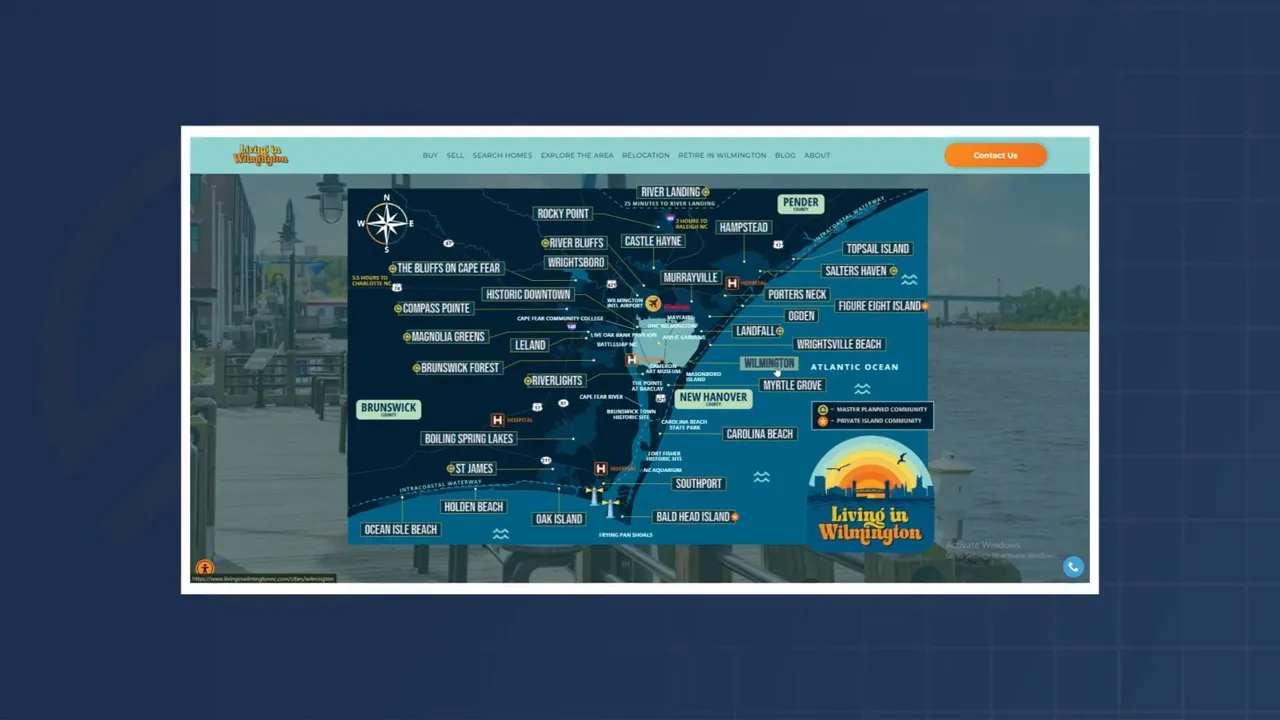
A map can help someone narrow down what matters to them. Maybe they want to be close to the airport. Maybe proximity to a Costco is a priority. Maybe they want a coastal location, a certain lifestyle, or access to particular amenities. A useful map turns vague interest into a more informed starting point.
That experience can then connect people to neighborhood pages, home search options, area videos, guides, and contact paths. The goal is not to force a conversion. The goal is to create enough value that reaching out feels like the natural next step.
That is the power of a connected system:
- People discover local information through YouTube.
- They get a feel for the agent's approach and perspective.
- They use the website to research neighborhoods and resources.
- They reach out when their timeline and needs become clear.
Why Trust Is the Real Real Estate Lead Generator
The best real estate content does not feel like a sales pitch. It feels like someone genuinely trying to help us make a good decision.
Kevin's approach is grounded in authenticity. The purpose of the channel is not to manipulate someone into moving to Wilmington or using one particular agent. It is to explain what Wilmington is like, what different areas offer, what he likes, what he does not like, and why a person may decide the market is or is not right for them.
That approach matters because people can sense when someone is trying too hard to close them. Nobody wants to feel pushed into one of the biggest financial decisions of their life.
When we provide honest information, the right people tend to connect with us. They recognize our style, values, energy, and way of communicating. That is why the phrase “your vibe creates your tribe” rings true in content marketing.
By the time a person reaches out, there is often already a sense of familiarity. They have spent time with the content, heard the explanations, and seen the agent's personality over multiple videos. Instead of starting from zero, we are often catching up to a relationship they already feel connected to.
That makes for better conversations and, typically, better-fit clients. It is not about casting the widest possible net. It is about building a meaningful platform that attracts people we can genuinely serve.
Turning Local Content Into a Real Estate Authority Platform
Real estate agents do not need to invent complicated content. The market itself gives us a deep list of useful topics.
We can create videos around relocation questions, neighborhood breakdowns, local amenities, lifestyle comparisons, buying considerations, and honest pros and cons. We can cover the practical things people need to understand before they move.
Every video becomes more valuable when it has a long life. It can bring in a person who needs help immediately, someone planning a move six months from now, or someone who is still two years away from taking action.
Video also becomes stronger when it is repurposed into written content. Turning videos into blog posts creates searchable pages that extend the value of each topic. It gives search engines and AI tools more context about the market, the coverage area, and the resources available on the site.
That does not mean we should just flood a site with generic words. The goal is useful, locally relevant information that matches what people are actually researching. Videos, blog posts, guides, interactive maps, neighborhood pages, and resource hubs can all work together to create a fuller online footprint.
The Results of Passive Real Estate Prospecting
Kevin began his YouTube journey in 2025. At the time of this case study, the channel had grown to around 604 subscribers, 87 videos, and more than 76,000 total views.
The website activity showed what happens when content and conversion infrastructure begin working together. In a 30-day period, the site received 4,911 website visits and 5,257 page views.
More importantly, there were two phone calls, 17 form submissions, and one email click recorded from the website during that period. Those are not just vanity metrics. They are signs that people are moving from research into contact.
There is also a quality difference. Some people may be years out, some may be six months out, and some may need to buy right away. The content works across all of those timelines because it keeps giving people information while they make decisions at their own pace.
Kevin's original objective was intentionally modest: one closing per month. That kind of attainable goal matters. It is easy to get overwhelmed by massive production targets, especially when we are trying something new. A realistic goal gives us room to learn, stay consistent, and build momentum.
How to Start a Real Estate YouTube Channel
If we are considering YouTube for real estate lead generation, the first step is not to promise ourselves 50 million in production overnight. Start with a goal that makes sense for the current stage of the business.
Here is a practical framework drawn from Kevin's experience:
-
Set an attainable business goal. One closing per month can be a powerful starting benchmark. A single closing may cover the investment in content and a strong website. A second can put the effort into profit territory.
-
Choose useful local topics. Focus on what people need to know before moving, not only what we want to sell.
-
Build a repeatable publishing schedule. Kevin published twice per week for about eight months before adjusting the pace. The exact schedule can vary, but consistency cannot.
-
Connect every video to helpful website resources. Give people a reason to explore further through maps, guides, neighborhood pages, and video blogs.
-
Allow the content to sound like us. A polished script is less valuable than a real perspective delivered with useful information.
We do not need an enormous production setup to start. An iPhone, a basic microphone such as a DJI mic, natural light during morning or evening golden hour, and a clear topic can be enough to create valuable local content.
Why Consistency Beats Perfection in Real Estate Content Marketing
Being on camera can feel like a mind game. Even extroverted people can sit down in front of a camera and suddenly wonder whether they are qualified, what people will say, how they look, or whether the video is any good.
Those thoughts are normal. The key is not waiting until they disappear. The key is continuing anyway.
Video is like a muscle. The more we exercise it, the more natural it becomes. We get better at explaining ideas, using our voice, making eye contact with the lens, organizing our thoughts, and delivering value without overthinking every sentence.

We should give the strategy time. Kevin's mindset was to commit to YouTube and the website platform for a full year rather than judging results after a few videos. That is a much healthier way to approach evergreen content marketing.
Perfection makes us delay. Consistency gives us data, confidence, and a growing body of work that can keep generating opportunities long after a video is published.
Build Online Equity With Evergreen Real Estate Content
Every useful video, blog post, guide, and neighborhood resource adds another layer to our online presence. That is digital equity.
Instead of relying entirely on cold calls, purchased lists, or constant outbound activity, we can build a library of local expertise that works around the clock. The more complete the coverage is, the more chances people have to find us when they need answers.
Website traffic for this case study came from direct visits, Google Search, DuckDuckGo, Bing, Yahoo, Facebook, and even recommendations from ChatGPT. In the measured period, the site recorded eight ChatGPT recommendations.
That does not mean we should chase every new technology trend or rely entirely on AI-generated content. The foundation is still helpful, human, locally informed content. AI may help with parts of the workflow, such as brainstorming or thumbnail ideas, but the real asset is our expertise and our willingness to show up consistently.
The future of real estate marketing is not just more automation. It is better information, stronger trust, and a digital presence that helps people before they ever pick up the phone.
When we lead with service, explain the truth about the market, and create a path from YouTube to genuinely helpful website resources, passive prospecting becomes very real. We earn attention over time. We build trust before the first conversation. And we create a business that is not dependent on chasing every lead.
YouTube, local content, and a conversion-focused website can work together to attract prospects long before they are ready to call. If you want to build a real estate marketing system that builds trust, grows your online presence, and generates leads over time, let’s talk.
Book your no-obligation strategy call today and discover how Liftoff Agent can help turn your content into a long-term lead generation system.
Frequently Asked Questions
Can YouTube generate real estate leads with a small channel?
Yes. A small but focused local channel can attract highly qualified prospects because the content answers specific questions about a market, lifestyle, and relocation decisions. Trust and relevance matter more than subscriber count alone.
What should real estate agents talk about on YouTube?
We should cover topics that help people make informed local decisions, including neighborhood overviews, relocation guidance, amenities, lifestyle comparisons, market considerations, and honest pros and cons of living in the area.
Why should a real estate agent connect YouTube to a website?
YouTube builds awareness and trust, while a website gives people resources to continue their research. Interactive maps, guides, neighborhood pages, video blogs, home search tools, and clear contact options help turn interest into meaningful inquiries.
How often should real estate agents post YouTube videos?
A sustainable schedule is more important than an aggressive one. Kevin began with two videos a week for about eight months, but even four quality videos per month can create meaningful momentum when the content is consistent and useful.
Do real estate agents need expensive equipment for YouTube?
No. We can begin with an iPhone, a basic microphone, good natural lighting, and a clear local topic. The value of the information and consistency of the publishing schedule matter far more than an elaborate production setup.
Read More: Your Real Estate Business Doesn’t Need More Hustle. It Needs More Focus
We specialize in working with real estate agents and teams to build local authority. We do this through creating and managing your brand, website, video and social presence.
We'd love to chat and show you how you can dominate your local market and avoid wasted marketing dollars.
Subscribe to Newsletter