Cris Melendez Reveals the Lead Gen System Behind YouTube
Cold prospecting has its place, but there is a very different feeling when people reach out already knowing who we are, how we work, and what market we serve. That is the big shift behind this Myrtle Beach real estate case study.
Over the last couple of years, Cris Melendez built a YouTube based lead generation system around local content, home tours, map tours, SEO, and a real estate website designed to keep people engaged instead of letting them bounce. The result was not just more traffic. It turned into real buyer leads, seller leads, guide downloads, and closed transactions.
Last year, the business closed 65 transactions. This year, the goal is 100. What makes that possible is not one trick. It is an ecosystem.
Table of Contents
- Why YouTube changed the game
- The content strategy that pulls in relocation leads
- Why map tours build trust faster
- The website piece most agents miss
- Real numbers from the system
- Speed to lead still matters
- Relocation guides and new construction guides
- From content to closings
- The real secret: consistency
- What agents can learn from this case study
- FAQ
Why YouTube changed the game
Cris has been in real estate since 2002, which means he has seen both eras. Before social media and video content, the business leaned heavily on door knocking, phone calls, and trying to convince strangers to trust us. That kind of outreach can work, but it is a grind.
YouTube flips the dynamic. Instead of interrupting people, we attract them. By the time someone calls, they often already feel familiar with us. They have spent time with our content, learned our style, and decided they want help before the first conversation even starts.
That is why passive prospecting is such a powerful phrase here. It does not mean doing nothing. It means building assets that keep working while we sleep, travel, or handle closings.
The content strategy that pulls in relocation leads
The channel is centered on living in Myrtle Beach, and that local angle matters. People relocating are not searching for generic real estate advice. They want to know what it is actually like to live in a place, what homes are available, what neighborhoods feel like, and where daily essentials are located.
In Cris's market, new construction has been a major opportunity. South Carolina has seen strong growth, and the Myrtle Beach area has a steady stream of new communities being built. So the content strategy naturally leans into:
- New construction home tours
- Area specific relocation content
- Pros and cons videos
- Tips and tricks for moving to the area
Even better, the videos are not stiff or overly polished. Cris mentioned that they keep things light, authentic, and a little silly. That matters more than a lot of agents realize. People are not only evaluating the homes. They are deciding whether they like us enough to trust us during a major life move.
Why map tours build trust faster
One of the smartest parts of the strategy is what happens in the middle of the home tours. After showing the house, Cris transitions into a map tour. This is where the content becomes much more useful than a standard listing walkthrough.
Instead of stopping at bedrooms, bathrooms, and finishes, the video starts answering the real relocation questions:
- Where are the hospitals?
- How far is the shopping?
- What is nearby for daily life?
- How does the community connect to the rest of the area?
That extra context builds trust because it helps people picture their life, not just a property. Anyone can show granite countertops. Not everyone helps buyers understand how a location actually works.
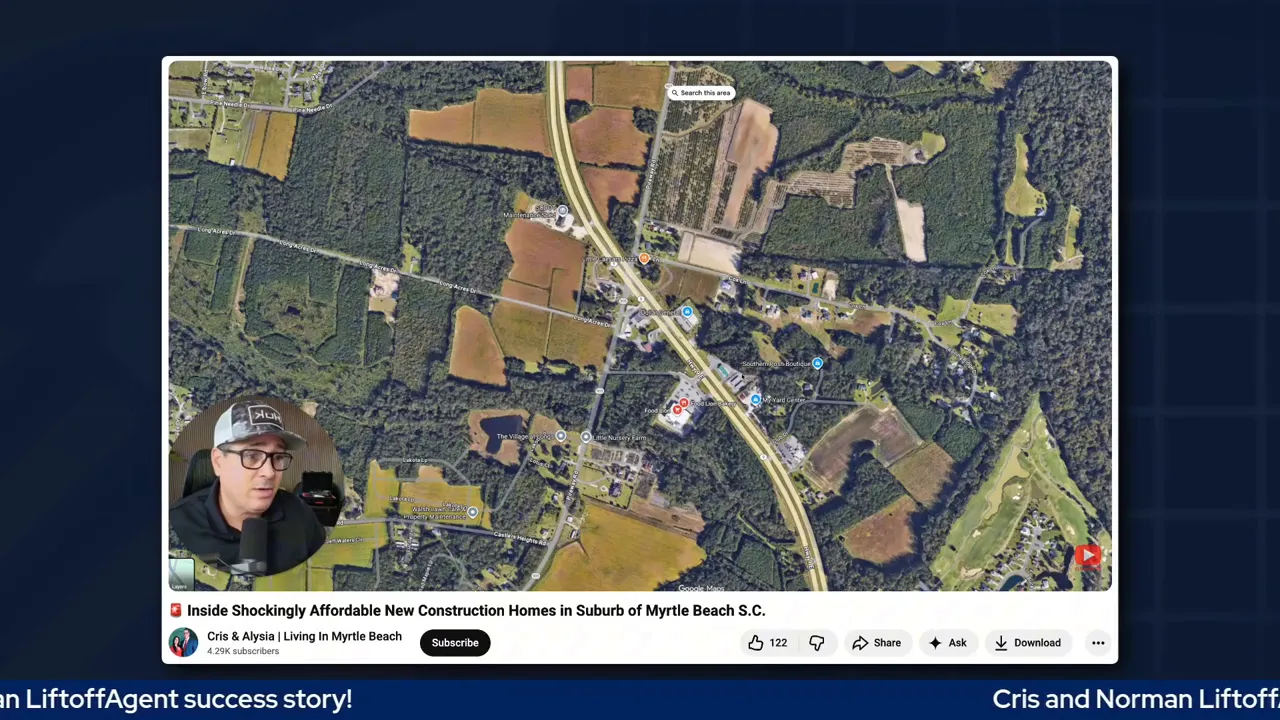
This also makes the content more strategic. A home tour can bring someone in. A map tour keeps them engaged and moves them closer to reaching out.
The website piece most agents miss
A lot of agents post videos and then send people to a generic website that does not support the story the content started telling. That creates a leak in the funnel.
What stood out here is how the website extends the same experience. Instead of acting like a digital business card, it gives visitors things to do:
- Explore interactive maps
- Browse available homes
- Read blog articles tied to the same topics
- Download detailed guides
- Submit forms to start the conversation
That is a very different experience from landing on a standard IDX page and leaving 20 seconds later. If we want YouTube for Realtors to become a real lead generation system, the website cannot be an afterthought.
Real numbers from the system
This is where the strategy stops being theory.
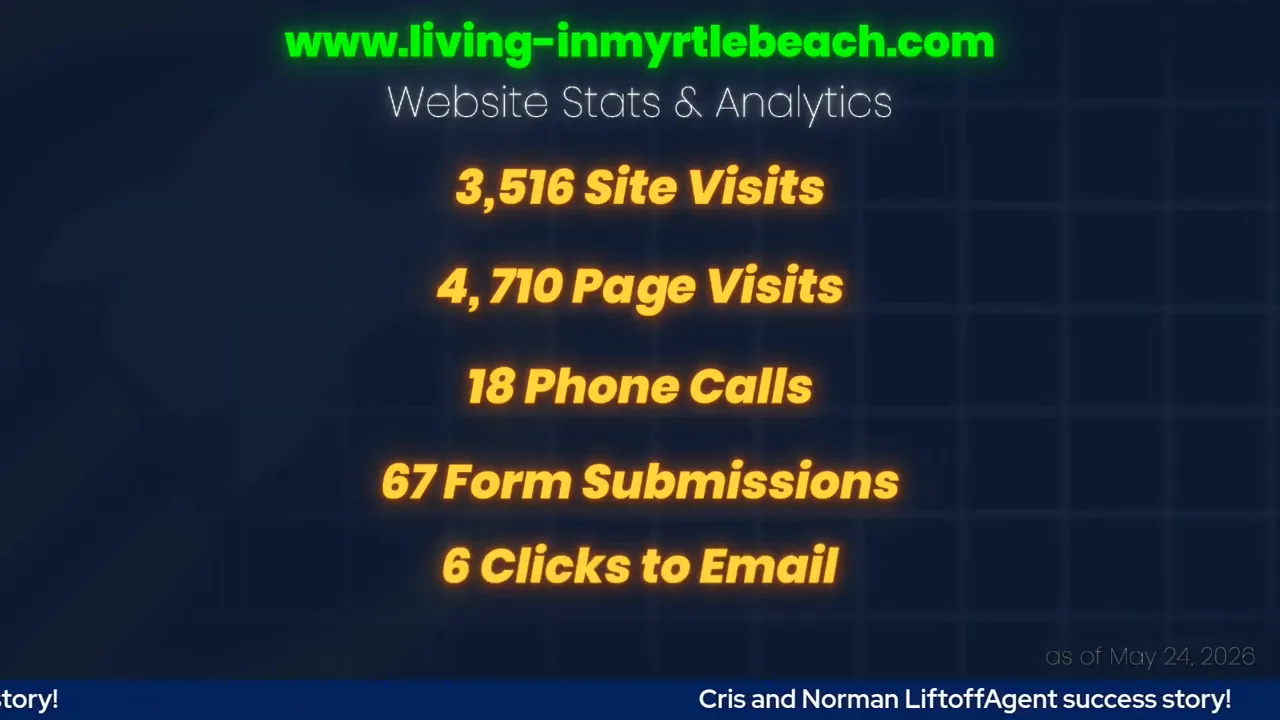
During the time period discussed, the website had generated:
- 3,516 site visits
- 4,710 page visits
- 18 phone calls
- 67 form submissions
- 6 click to email actions
The top traffic source was Google, sending 1,684 visits. That is a huge point. This was not only YouTube traffic. The content and website were also feeding real estate SEO and organic search visibility.
That kind of overlap is exactly what we want. One piece of content can help on multiple fronts. It can attract attention on YouTube, support search traffic on Google, and push people into a website journey that captures leads.
Speed to lead still matters
Even with a passive prospecting model, follow up is still active. Cris keeps this part simple. When a lead comes in, he calls right away if he is available. No delay, no overthinking.
That speed matters because the lead is warm and timely. These are not random names sitting on a purchased list. They already know the brand. A quick response strengthens the momentum that the content created.
The business also has clear role separation. Cris handles the office side and incoming leads, while Alyssa is often out handling showings and field work. That divide and conquer model makes the response time easier to maintain.
There is also CRM backup in place through Follow Up Boss when an immediate personal call is not possible. That gives the business both speed and structure.
Relocation guides and new construction guides
Another important layer in this lead gen system is the downloadable guide.
Cris highlighted two strong assets in particular:
- A relocation guide
- A new construction guide
These are not flimsy freebies thrown together just to collect an email. They are detailed enough that people regularly comment on how useful they are. The relocation guide alone averages around 80 downloads per month.
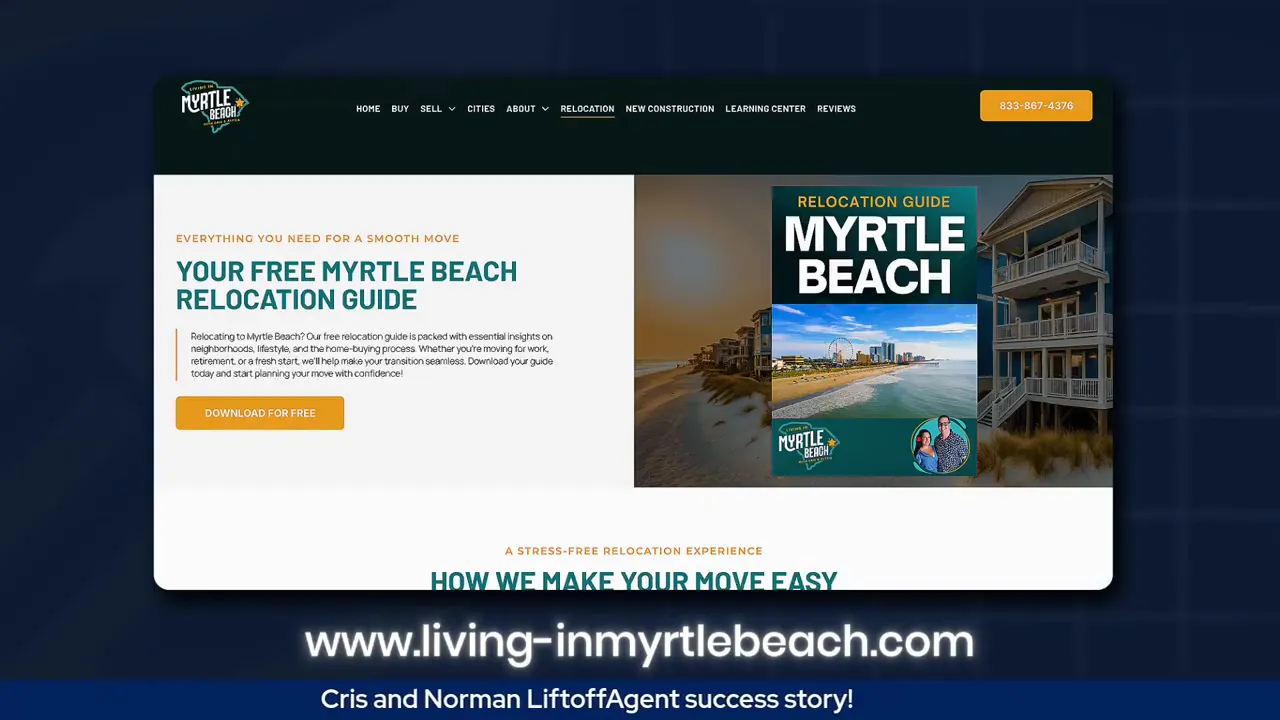
That is significant because guide downloads often catch people earlier in the journey. Not everyone is ready to call today. Many are still researching, comparing, and trying to reduce uncertainty. A strong guide earns trust before a direct conversation ever happens.
From content to closings
The business impact is real. Last year brought 65 closed transactions and roughly $23 million in production. At the time of the conversation, there were around 30 deals under contract, with seven closings lined up in a single week.
For a system built over only a couple of years, that is serious momentum. It also reinforces an important lesson. A YouTube channel by itself is not the full answer. A website by itself is not the full answer either. The results come from stacking the right pieces together.
The real secret: Consistency
If there is one principle that came through louder than anything else, it is this: patience matters, but consistency matters even more.
A lot of agents try video for a few weeks, do not see instant results, and quit. That is usually not a platform problem. It is a commitment problem.
Cris and his team made a point to publish one video every week. That regular cadence compounds. It builds the library, strengthens search presence, increases local authority, and creates more entry points for buyers and sellers to discover the brand.
This is a long game, but it does not have to be a slow game if we are disciplined. Consistency shortens the path. Every video becomes another digital salesperson working in the background.
What agents can learn from this case study
If we strip this all down to the essentials, the playbook looks like this:
- Create local content people are already searching for.
- Lean into market specific opportunities such as new construction or relocation.
- Make the content human and authentic.
- Add map tours so people understand the lifestyle, not just the property.
- Send traffic to a real estate website that keeps people engaged.
- Offer useful lead magnets like relocation guides.
- Follow up fast when leads come in.
- Stay consistent long enough for the system to compound.
That is how passive prospecting becomes actual real estate lead generation. Not by hoping a video goes viral, but by building a connected system that makes the next step obvious.
Want to build a similar “YouTube + real estate website” lead engine in your market? If you’re a real estate agent (or broker/team leader) ready to replace cold chasing with warm, content-driven inbound leads, book a strategy call now. Book your strategy call (no obligation) — we’ll review your current YouTube/channel and website funnel, then map out the exact next steps to start generating buyer and seller leads (and guide downloads) consistently.
FAQ
Does YouTube really work for real estate lead generation?
Yes, when it is paired with the right strategy. Local videos, home tours, map tours, SEO, and a high converting website can work together to attract buyer and seller leads who already know and trust the brand.
What kind of videos worked best in this Myrtle Beach real estate strategy?
New construction home tours were the main driver, supported by relocation content, pros and cons videos, and practical area specific topics about living in Myrtle Beach.
Why are map tours so effective for Realtors?
They answer the questions buyers actually have about daily life. Showing where hospitals, shopping, and major areas are located helps people trust us faster because they can picture living there.
How important is the real estate website in this system?
It is critical. A generic website often loses people quickly. An interactive site with maps, blogs, guides, and clear conversion paths gives visitors reasons to stay longer and take action.
How fast should we respond to inbound leads?
As fast as possible. In this case, leads were called immediately whenever available, with CRM automation in place as backup. Warm inbound leads are far too valuable to let sit.
Is this a quick win strategy?
No. This is a long term strategy, but consistent weekly publishing can create momentum faster than many people expect. The key is not stopping too early.
We specialize in working with real estate agents and teams to build local authority. We do this through creating and managing your brand, website, video and social presence.
We'd love to chat and show you how you can dominate your local market and avoid wasted marketing dollars.
Subscribe to Newsletter